"Taking on a space as iconic as Fruition was both an honor and a responsibility," Kevin Nguyen told Westword.
Nguyen made that remark the day his firm's redesign of 1313 East Sixth Avenue was made public. He wasn't overstating it. For eighteen years, that address belonged to chef Alex Seidel's Fruition, the kind of restaurant that becomes shorthand for a neighborhood's taste in itself, elegant enough for an anniversary dinner but familiar enough that regulars didn't bother with a menu. When it closed in January 2025, Country Club lost more than a dinner reservation. It lost a fixed point.
What reopened there in May 2026, after sixteen months of drawn shades and a room nobody would touch, tells you something about how this stretch of Denver actually works. It isn't a story about a new restaurant landing in the neighborhood. It's a story about how little distance there was to travel to find the person who'd take it on.
The Sixteen Months the Corner Went Quiet
Fruition didn't fail. It ended on its own schedule, and the space sat empty from January 2025 until May 2026, an unusually long vacancy for a 1,100-square-foot dining room with Fruition's name still on the lease history. Plans for a successor weren't announced until December 2025, nearly a year after the doors closed. A firm opening date didn't follow until late April 2026, and the doors themselves didn't open until May 7.
That gap is the tell. A room this well-known doesn't sit dark for over a year because nobody wants it. It sits dark because the people who could want it are being careful about what they'd be signing up for. Chef Quincy Cherrett signed his lease in November 2025, roughly ten months after Fruition closed, which means the decision to take on the address took longer to make than most restaurants take to build out. Whoever stepped into Seidel's old kitchen was always going to be measured against eighteen years of expectations before serving a single plate.
Every Name On The New Marquee Already Knew This Corner of Denver
Cherrett isn't a transplant chasing a trend into Country Club. His résumé runs through Colt & Gray and Death & Co., where he worked as chef de cuisine, and through Izakaya Den and Sushi Den, the Pearl Street kitchens that have anchored the Wash Park side of this same pocket of Denver for years. Before any of that, he cut his teeth in Jackson Hole, including a stretch at the James Beard-nominated Teton Thai, which explains why a green curry shows up on a menu built around a storied Denver dining-room address. His own ventures before this one, the 22 Provisions food truck and Eloise, his bistro concept inside Avanti Food & Beverage, were staged just far enough from Sixth Avenue to build a following without borrowing Fruition's name to do it.
None of that reads like outside investment moving in. It reads like the neighborhood's own bench filling a gap on its own roster. Madeline is Cherrett's first solo brick-and-mortar restaurant, but it's the fifth or sixth stop in a career that's spent a decade circling this exact several blocks of the city. If you've eaten well in Country Club, Wash Park, or the Pearl Street corridor over the past ten years, there's a real chance you already ate something Cherrett had a hand in, without knowing his name yet.
What Actually Traveled With the Address
The clearest evidence that this is inheritance rather than replacement sits below the dining room. Madeline didn't have to build a wine program from nothing. It kept Fruition's cellar, the bottles Seidel and his team collected over nearly two decades, and general manager Bryan Trott is building the new list around what was already down there rather than starting over. It's a small operational detail, but it means the first glass of wine a longtime Fruition regular orders at Madeline may be a bottle that's been sitting in that building since before the restaurant changed hands.
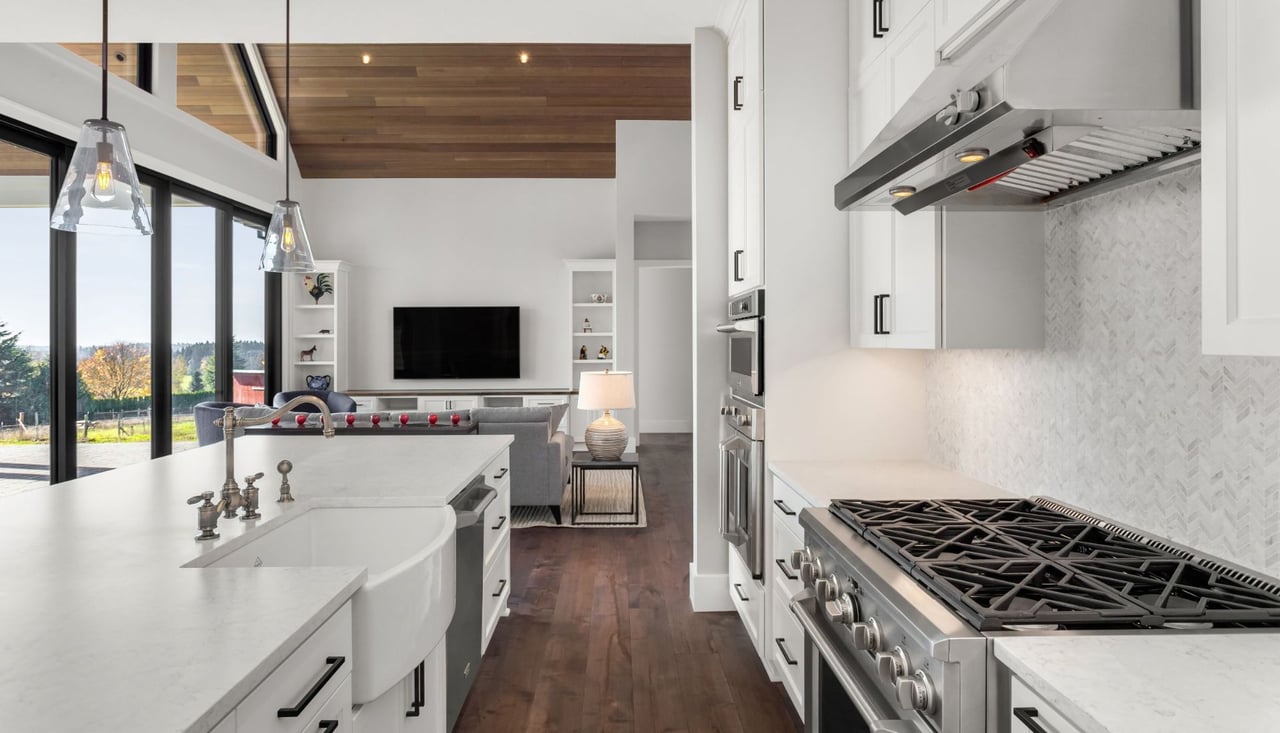
The room itself got the same treatment. Regular Architecture kept the bones of the space largely intact and worked around them rather than erasing them, adding natural materials and a small design touch, a hotel key display on one wall, that nods to Cherrett's own upbringing as the son of a longtime hotelier. The result is a dining room that reads as continuation rather than renovation, which appears to have been the intent from the start.
What's Actually on the Table Now
The menu makes its Thai and Japanese influences plain without losing the neighborhood-restaurant register Fruition was known for. Early dishes include tom yum-inspired shrimp toast on milk bread, a pan-seared halibut with green curry and black forbidden rice cooked almost like risotto, and a roasted half chicken finished with laab dressing. Lamb agnolotti with spring pea, mint, and morel mushrooms rotates alongside scallops with white miso celery root purée and jasmine tea-pickled pears. Dessert closes with black sesame cheesecake or a passion fruit crème brûlée. At the bar, expect drinks built the way Cherrett learned to build them at Death & Co, a soy sauce-infused rye Manhattan alongside a Sumu Punch made with tequila, rum, orgeat, coconut milk, and yuzu.
If you're planning a visit, note the hours are tighter than a lot of Denver's newer openings: Tuesday through Thursday from 5 to 9 p.m., Friday and Saturday from 5 to 10 p.m., closed Sunday and Monday. That's worth building into a weekend plan rather than a spontaneous one for now. Reservation details and the current menu are posted at restaurantmadeline.com.
The Block Around It Never Waited
Madeline's return doesn't reopen a dead stretch of Sixth Avenue. It fills a single storefront on a block that kept its rhythm the whole time the space sat dark. Satchel's on 6th has held its ground as the neighborhood's retro-leaning regular spot with its craft beer list intact, and Oliver's Meat Market has kept supplying the butcher-counter needs that don't wait for a new restaurant to sort itself out. A few blocks over, the Front Yard Community Concert series has kept bringing neighbors out to the 600 block of North Williams Street with lawn chairs and homemade setlists, a low-key summer fixture that has nothing to do with which chef holds the lease at 1313.
That's worth sitting with. The neighborhood's daily texture, the concert on a residential block, the butcher shop, the retro diner, never depended on what happened at the old Fruition address. Its return matters because it's a genuinely good restaurant back in a room that had earned the right to sit empty until the right person was ready, not because the block was waiting on it to feel complete.
An Old Habit, Repeating Itself
The Denver Country Club itself, the private club the neighborhood takes its name from, was founded in 1887 and still bills itself as the oldest club west of the Mississippi. Whatever you make of that kind of institutional pride, it points at something true about this pocket of the city: it doesn't reinvent itself so much as it passes things carefully from one steward to the next. Madeline is the latest small proof of that habit, a restaurant built by someone who already belonged to this stretch of Denver, taking over a room he clearly understood was never really empty.
If you're weighing a move into Country Club, Cherry Creek, or one of the other Denver neighborhoods where this kind of quiet continuity shapes daily life more than any listing sheet can, Coleen Sanders can walk you through what these blocks are really like to live on. Let's Connect.